Timeless Proverbs and Sayings: How They Transform Your Health and Wellbeing

Updated: Aug 29, 2025
I have always loved sayings and proverbs. They capture some essential facet of life in just a few concise words. Just like multivitamins, which contain essential nutrients in a concentrated form, or a picture, which “is worth a thousand words,” sayings and proverbs capture truths about the human experience that can take many life experiences and trial and error to accumulate. Proverbs impart knowledge and give advice, they guide and encourage us to make good decisions for a well-lived life. Proverbs capture the wisdom of ages, and in that way they are timeless. There is a whole chapter, in fact, in the Bible called Proverbs which dates back 3,000 years to the time of King Solomon. The book of Proverbs has 31 chapters and hundreds of verses of advice and wisdom, like:
“Mercy is fruit to a man,
And a poor righteous man is better than a rich liar.”
(Proverbs 19:22) or
“Wine is an intemperate thing, and strong drink is full of violence;
And all who commingle with it will not be wise.”
(Proverbs 20:1).
Or how about this one bit of timeless advice:
“Do not be a companion to an angry man,
And do not associate with a quick-tempered friend,
Lest you learn his ways
And receive a snare for your soul.”
(Proverbs 22:27)
Proverbs are not the property of any one region or culture. All cultures have their own rich traditions of wisdom that are reflected in ancient sayings and proverbs. Probably you have heard this one: “A journey of a thousand miles begins with a single step.” That is a saying attributed to the ancient philosopher Lao Tzu, who lived 2,500 years ago. As is this: “Nature does not hurry, yet everything is accomplished.” How pertinent to our lives today, when are all so busy and rush around like the proverbial chicken with its head cut off (a really awful saying in my vegan opinion)!

I have to say that some of my favorite sayings and proverbs come from Africa. They have a wonderful directness that captures the immediacy of life. They are also very wry and funny! How about these to give you a flavor? “A goat owned by two people sleeps outside,” meaning that when there is shared responsibility, nobody takes responsibility, so the poor goat sleeps outside where the hyenas can get it. Or, “Only a fool tests the depth of a river with both feet,” meaning that it’s important to consider the outcome of an action before jumping in. Or this funny one: “The best time to plant a tree was 20 years ago. The second best time is now.” The western equivalent of this proverb is “better late than never,” but the African version has an edge, which makes it a lot funnier.

Proverbs are often written as a metaphor or in a figurative language that can feel confusing and irrelevant, like “strike while the iron’s hot.” At a literal level, this proverb talks about a blacksmith’s approach to working the iron. He strikes the iron with a hammer while it’s red hot because that is when the iron is most malleable and can be shaped into a desired item. If you have been to a Medieval Fair, you have seen exactly that scene at the smithy: the blacksmith holding a piece of red hot iron with large tongues while hitting it with a hammer to make a sword or a shield or some other household item. At a figurative level, the proverb is talking about seizing an opportunity when it is right there in front of you; making a decision and taking a step instead of being frozen by indecision or anxious “what ifs.”
I could go on all day with examples because they are a fascinating, endless fountain of knowledge and common sense. One more -- this one is a Romanian saying that I often bring up in sessions with clients who struggle with anxiety: “Don’t paint the devil on the wall.” If you have anxiety, you probably get this instinctively -- you worry about the worst case scenario, the terrible outcomes, the ‘what ifs’ that are frightening and incapacitate you and make the anxiety worse.
The interesting thing about proverbs is that they speak of universal human themes, regardless of region, culture, and, as you saw, time. A proverb from 3,000 years ago is as relevant today as it was then. So, as I was thinking about this: I wondered how proverbs might be reflective of underlying biological processes that explain the advice in the proverb. Might be a little bit of a stretch, but why not? Let’s see what we discover.
Timeless proverbs and sayings: how they transform your health and wellbeing.
We will work with this saying: “A stitch in time saves nine.” On a literal level, it says that if you have a small tear in a garment, it is best to fix it right away instead of letting it go because the tear will grow bigger with time and it will take a lot more stitches and expense to fix a bigger hole. To most people in this time, when clothing is cheap and abundant, such advice can feel pointless. If your shirt is torn, throw it out and get another one. But, clearly, this is not just about stitching a torn shirt. This saying would apply to a leak in your roof, a dripping faucet, a pinging sound in your car, a funny looking mole on your skin. The applications are endless because, in fact, this saying is talking about procrastination.
So the question is: does procrastination affect what happens in your body? how your brain works? how it affects your health?
Think of a task that you are procrastinating -- don’t we all have a task like that? in my case, I have been procrastinating all summer long cleaning the garage. It’s a big job, and getting bigger by the week because stuff that isn’t put away where it belongs seems to attract other stuff that isn’t put away. I procrastinate because It will take a long time, it’s unpleasant, it’s dirty, it requires a lot of decision-making, it’s about 0% fun - ‘where should I put this,’ ‘what should I do with that.’ ‘what the heck is this,’ ‘where did this come from,’ ’what if I need it?’ It’s endless!

So, when I decide ‘I don’t have time for this today,’ I get an immediate feeling of relief and an instant squirt of dopamine that says, ‘yes, let’s do something interesting/easy/fun instead.’ A feedback loop is created where dopamine, a neurotransmitter associated with pleasure and instant gratification, is released in response to avoiding something unpleasant.
Unfortunately, procrastination has far reaching consequences on health and brain functioning. Once established, the loop of avoidance, immediate gratification, and reward, all controlled by the limbic system, becomes stronger and harder to break. We are drawn to seek immediate gratification at the expense of long-term goals. Instant gratification, as the name says, is instant, the fun is now. With long-term goals, however, the rewards lie somewhere in the unknown future. Sacrifice having fun today in order to reach a goal in the future for a reward that may not actually materialize. It is a pretty hard sell, if you think about it, particularly these days when gratification is at our finger tips 24 hours a day!
But postponing gratification and working towards a goal has very real benefits for your brain and your health, physical as well as mental. It strengthens the prefrontal cortex where executive functions are located. It increases working memory, attention, planning ability, cognitive flexibility and problem-solving, emotional control, self-control, time management, decision-making.
Unfortunately, if avoidance and immediate gratification loops grow stronger, executive functions grow weaker. In fact, studies suggest that chronic procrastination is related to decreased gray matter and weakening of the prefrontal cortex. It becomes harder and harder for he prefrontal cortex to override the reward seeking of the limbic system.
In the meantime, however, your brain knows that the avoided task is still not done; it is an unfinished task that creates a cognitive burden. This burden even has a name: the Zeigarnik Effect. Unfinished tasks are tagged by your brain as “open jobs” that are kept at the forefront of the mind, causing intrusive thoughts, anxiety, stress, sleep problems, reduced working memory and short-term memory, and focusing problems. Paradoxically, it also decreases the ability to enjoy things that would normally be enjoyable. So it’s a lose-lose proposition. And to make matters worse, the ramifications for health are tremendous: increased risk for cardiovascular problems, increased blood pressure, more pain, delayed medical care, relationship problems, anxiety and depression, and overall decreased life satisfaction.
So, in the end, the elders of bygone times were indeed correct: “a stitch in time DOES take nine” in many ways that go beyond fixing a torn shirt and that are complex and interconnected.
Fortunately there are ways, not necessarily easy, but there are ways to interrupt the procrastination loop. In a past blog, In a Minute: The Hazards of Procrastination, I wrote about exactly that, the hazards, but also some solutions. Here is a link to that post:
And now that I reminded myself that procrastination is causes a lot of problems, I think I will tackle that garage after all.
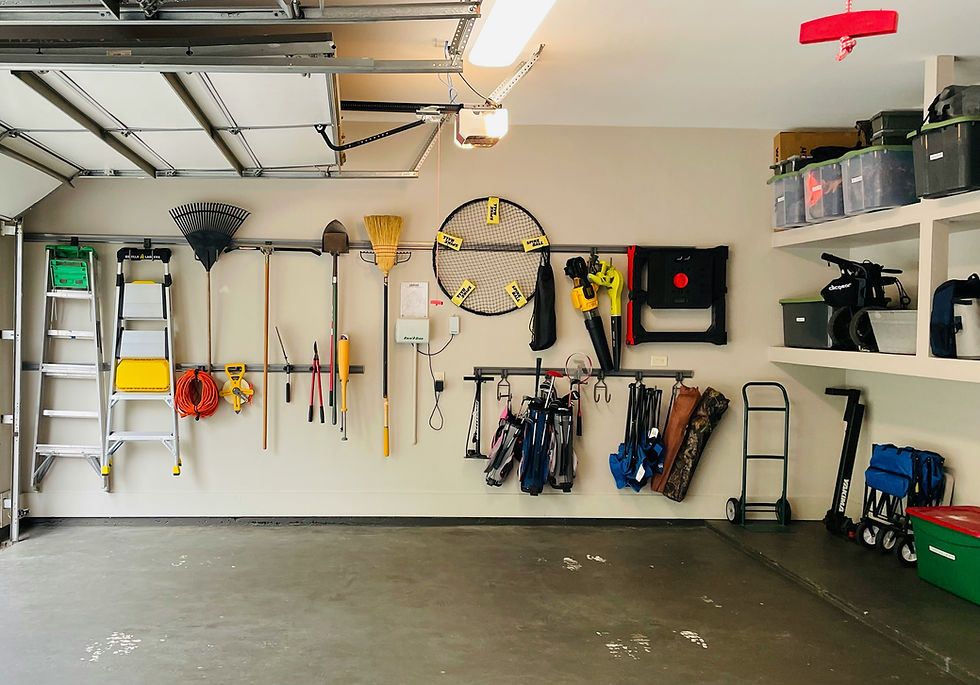
What have you been procrastinating that a you could tackle this weekend?
Dr. Dana Watts
Clinical Psychologist
Helping Clients in the Greater Cleveland Area
440-895-1100

As usual, wonderful article! I love how you connect seemingly unrelated things (goats sleeping outside & cortex?) and have it all make sense. Maybe I’ll tackle my garage now too 💪😉